

In enterprise performance management, and in life, we’ve been conditioned to believe: no goal, no result. “No wind is ever favourable to the sailor who doesn’t have a goal” is just one of many incarnations of this goal-mania. And not just any goals: they have to be SMART, Specific, Measurable, Achievable, Relevant and Time-bound. While the SMART mantra comes from the corporate world, similar rules are often applied to life in general. Young people are told: if you don’t know what you want to achieve and pursue it rigorously, you’ll end up wasting your life.
This article is meant to be genuinely thought-provoking, and that includes a little provocation, so keep your blood pressure medication handy: the top performers in history often failed completely on their goals.
Are SMART goals really as crucial to every situation in our lives as commonly suggested? Inspired by Boyd Varty’s book The Lion Tracker’s Guide to Life, I want to question some of those assumptions, and what they mean for enterprise performance management and HR. Don’t worry, I’m not asking you to discard objectives altogether, they are a fundamental part of management. I just want to offer some food for thought on the rigour of goal management, and the power it holds over our lives.

Performance review: Christopher Columbus scored 0% on his goal
Most of the greatest explorers just got terribly lost. Before we talk about lion trackers and HR, let’s talk about Christopher Columbus. His goal: India. When he arrived at what he believed to be India, he was actually further from his objective than he had been at the start of his journey. By the rules of modern HR, he was a complete failure. And yet he was richly rewarded, remains the best-known explorer in history to this day, and has a country named after him, among many other places.
My favourite explorer is Luís Vaz de Torres. The Spanish captain set sail from what is now Chile, aiming to find the Great South Land correctly assumed to exist somewhere near today’s Australia. He managed to sail through the narrow passage between Australia and the Indonesian archipelago and reported back: “There is nothing!” He, too, was completely off target, but discovered the maritime passage now named after him: the Torres Strait.

The lion tracker’s perspective on goals
“I have no idea where we are going, but I know exactly how we’ll get there.”
Boyd Varty, The Lion Tracker’s Guide to Life
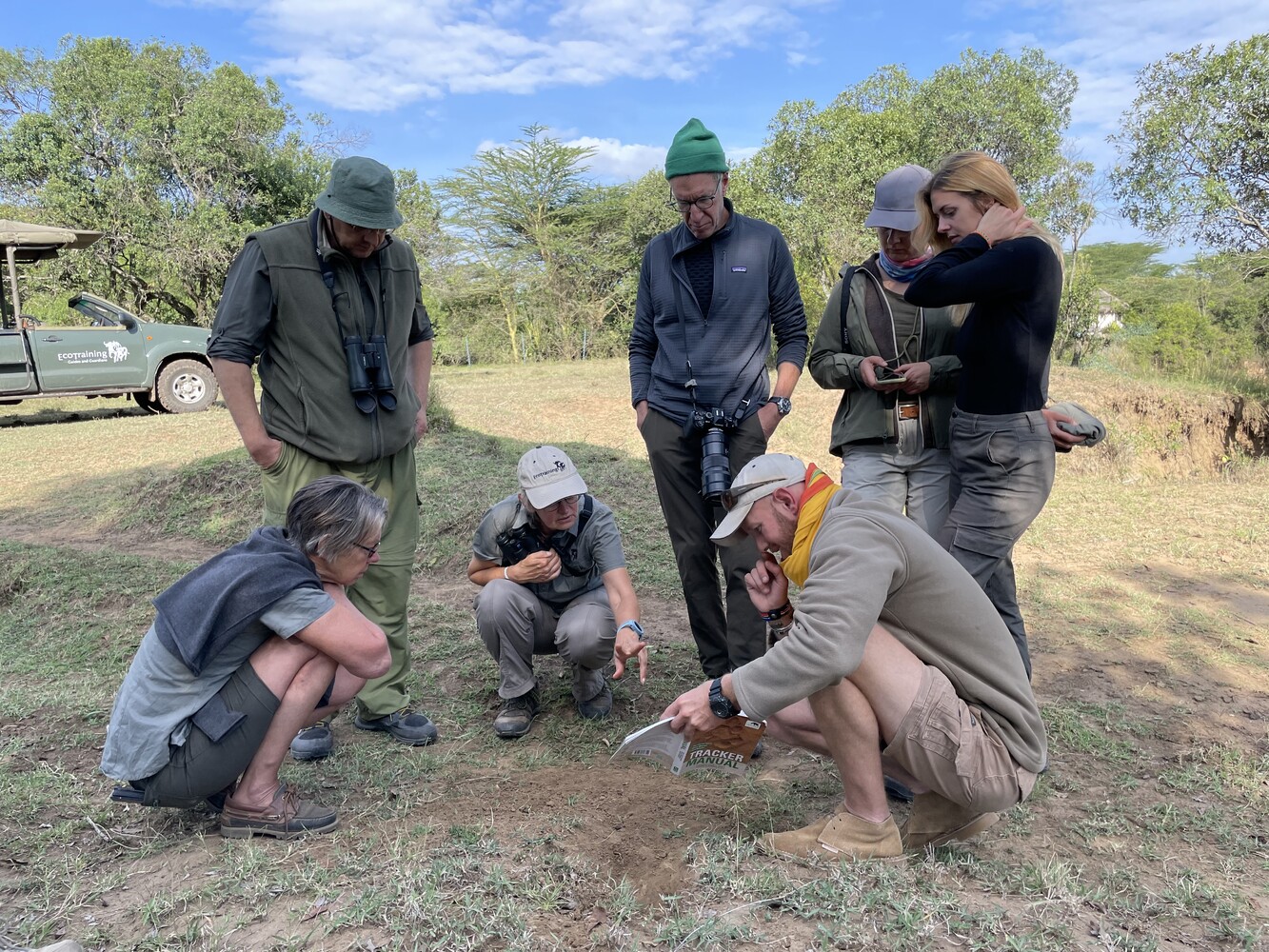
What does that mean? A lion tracker tries to find lions in the African bush, usually a national park or conservancy, so the guides from a lodge can take visitors to see them. Trackers use the ancient art of reading footprints, droppings, disturbed grass and the behaviour of other animals to follow a trail. They never know where it will lead. They may not even find a lion; the trail might lead them to a herd of buffalo before it goes cold. What they always know is how to proceed towards a goal that is not yet known. Like any analogy, this one has its limits, but I find it a useful prompt to question our assumptions.
Sir Alexander Fleming: fired for goal failure, despite saving millions of lives?
Do we always need to know where a journey will take us? Or is it sometimes right to let ourselves be guided by circumstance, method or instinct, and see where that leads? Can that kind of serendipity matter in business and in HR? Wherever we depend on creativity and innovation, tight goals can be counterproductive. Remember Sir Alexander Fleming, who discovered penicillin. He was looking for something else entirely, and would have failed any modern “clean desk” objective too, since he forgot about an experiment while he was away. Under strict enterprise performance management, would millions more people have died before that breakthrough?

Dear HR, is performance management too tight?
How often do we wander down an unplanned path, especially in team discussions, and later find that the time apparently “wasted” produced an unexpected idea or a solution of real value? If tight goals don’t let employees look left or right of the shortest path to their target, creativity gets stifled. Perhaps goals sometimes need to be more open, which often means letting go of the SMART paradigm:
- “Find some land, somewhere”: not remotely specific.
- “Find a cure for some of the worst bacterial diseases, including sepsis, diphtheria, anthrax, pneumonia, syphilis and streptococcal infections”: nobody at the time would have called that achievable.
- “Play around a bit and see what you find”: the nightmare of the SMART goal police.
How do we make sure our organisation works towards its objectives, without the next Spencer Silver discarding the discovery that became the Post-it note, because it didn’t serve his objective of developing a super-strong glue?

Don’t blame your HR system for suffocating agility
Of course, I’m thinking of goal and performance management systems like SAP SuccessFactors PMGM here. All such systems carry the risk of enforcing a rigid process that kills off valuable approaches simply because they are off the prescribed track. But if you suffocate someone with a scarf, that’s not the scarf’s fault.

Would a lion tracker use SAP SuccessFactors PMGM?
Modern solutions, including SAP SuccessFactors, allow a configuration that leaves enough room to breathe:
- Use the “achievement” concept within Continuous Performance.
- Give line managers the option to adjust ratings based on unplanned criteria.
- Update objectives regularly, and ad hoc, as circumstances change and unplanned objectives are added.
A modern IT solution for performance and goals should, in fact, make it easier to manage goals with enough leeway for creativity and agility. It just needs to be implemented the right way, which may mean rethinking your policies and processes as much as your system. Whether your team is on the shop floor, spread across offices in eighteen time zones, or permanently on the road seeing customers, the system should be accessible around the clock to update and check status, keep track of performance and changes as they happen, and complement, not replace, the one-to-one conversation.
Unless HR insists on pulling the scarf tight around line managers’ necks, an easy-to-use mobile solution like SuccessFactors can help you stay on top of things in an agile environment. With the wrong policies or culture, though, it can just as easily kill agility.
If this article has provoked a thought, or even a doubt, about your current process setup: goal achieved. Feel free to get in touch, I know people who can help you fix that, combining strategy, process and system.
Back to lion tracking
I still owe you an answer to the question above, though you probably already know it. Suggesting that a lion tracker would take a SuccessFactors mobile app into the bush would clearly be pushing it a bridge, or two, too far. But if trackers did use a performance management system, it would be SAP SuccessFactors, wouldn’t it?

If you want to go beyond goal management, I can highly recommend The Lion Tracker’s Guide to Life. It packs heavy themes, your inner track, holistic contextual awareness, and purpose, into a short, easy read. Believe me, you’ll need to plan in far more thinking time than reading time.
And if you’d like to take a few days for out-of-the-box thinking, surrounded and inspired by wilderness: let’s talk. I’ve wanted to run a nature-based design-thinking workshop on HR processes and systems somewhere in East Africa for a while. There’s no time like the present to get a few genuinely open-minded people together to do exactly that. Nothing opens the mind to unconventional, pragmatic solutions quite like raw nature. Read more about that offer on A change of perspective in Kenya.


Goal: think wild, in the wild.
Originally published on LinkedIn, 3 July 2025: Corporate HR, Goals&Performance and Lion Tracking.